
Your Move York Local Area Guide


Why move to York?
York is a historic cathedral city in North Yorkshire that has evolved into one of the UK’s most desirable places to live, offering a rare balance of heritage, modern convenience and high quality everyday living. Enclosed largely by medieval city walls, the centre is compact and highly walkable, yet just beyond it lies a network of established suburbs and easy access to open countryside.
The city’s appeal is strengthened by consistent investment in infrastructure, particularly around the rail corridor and expanding residential districts. York also benefits from a strong local economy, supported by healthcare, education, rail engineering, digital industries and tourism, creating a resilient employment base.
What makes York particularly distinctive is how seamlessly it combines historic character with practicality. Residents can live in a city with Roman roots and Viking history while enjoying modern transport, retail and leisure amenities.
York property market
York’s property market is varied and well established. Housing ranges from historic terraces and townhouses close to the city centre to Victorian and inter-war family homes across residential areas such as Heworth, Fulford and Acomb. Suburban neighbourhoods and nearby villages provide larger semi-detached and detached properties, alongside newer housing developments on the city’s edge. Demand comes from owner?occupiers, families, professionals and renters, supported by employment, universities and restricted supply within the city boundary.
York’s housing market is both varied and tightly held, contributing to long-term demand and stable values. Within and around the city centre, buyers will find Georgian townhouses, Victorian terraces and converted period properties, many within walking distance of the historic centre.
Popular residential areas such as Heworth, Fulford, Huntington, Rawcliffe and Acomb offer traditional family housing, while outer suburbs and nearby villages such as Bishopthorpe, Strensall, Haxby & Wigginton provide larger detached homes, often with gardens and greater space. New-build developments on the outskirts continue to attract professionals and growing families seeking modern energy-efficient homes.
Demand is consistently driven by a combination of factors: limited land availability due to the city’s historic boundaries, strong employment opportunities, excellent schools, and its popularity with commuters working in Leeds, London and the wider Yorkshire region.
Transport links in York
York is one of the best-connected cities in the North of England. The main railway station sits on the East Coast Main Line, providing direct high-speed services to London in under two hours, as well as regular connections to Leeds, Manchester, Newcastle and Edinburgh.
Road links are equally strong, with access to the A64 (towards Leeds and the coast), A19 and wider motorway network via the A1(M) and M1 corridors. The city’s ring road system helps manage traffic flow and provides efficient access to surrounding neighbourhoods and retail parks.
York is also known for its excellent sustainable transport options. Its compact layout makes walking and cycling highly practical, supported by an extensive cycle network and one of the UK’s most successful park and ride systems, which significantly reduces congestion in the historic centre.
Education in York
Education is a key driver of York’s long-term residential appeal. The city offers a strong mix of well-regarded state primary and secondary schools, with many areas benefiting from catchment access to high-performing options.
York also has a notable independent education sector, including the highly regarded St Peter’s School, York, one of the UK’s oldest and most prestigious private schools. Alongside other independent schools in the wider region, families have access to a broad range of educational pathways.
Higher education is anchored by the University of York and York St John University, both contributing significantly to research, innovation and employment, while also supporting a strong rental market.
Amenities and Leisure
York offers an unusually rich mix of amenities for a city of its size. The city centre combines high street retailers, independent boutiques and historic markets, including the well-known Shambles area, one of the best-preserved medieval streets in Europe.
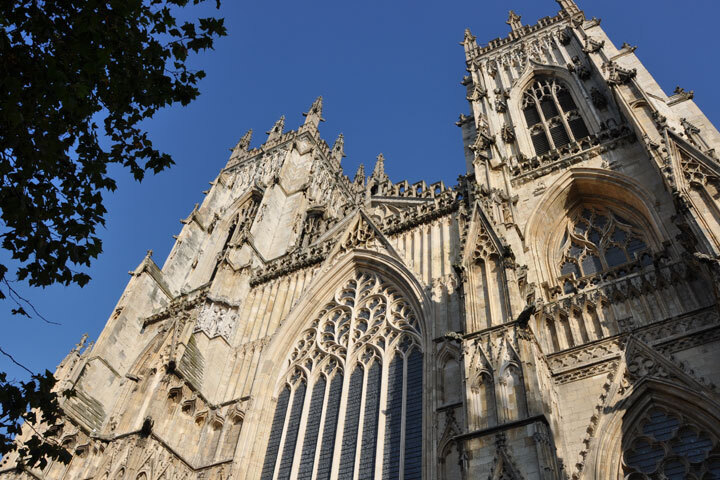
Cultural life is a major strength, with attractions such as York Minster, the National Railway Museum, the JORVIK Viking Centre and a wide range of theatres, galleries and festivals throughout the year.
Outdoor space is another key feature. The River Ouse runs through the city, with riverside walks and cycle routes connecting multiple neighbourhoods. Parks such as Rowntree Park and Museum Gardens provide accessible green space, while the surrounding countryside offers immediate access to the Yorkshire Wolds and Howardian Hills.
Local Character
York’s character is defined by contrast, historic yet modern, compact yet spacious, vibrant yet relaxed. The city centre is rich in heritage, with cobbled streets, medieval architecture and Roman-era foundations visible throughout daily life.
Beyond the centre, neighbourhoods take on a calmer, more residential feel, with tree-lined streets, community hubs and local shopping areas. Many districts function as self-contained communities, each with their own identity, schools and amenities.
Importantly, York maintains a strong sense of authenticity despite its popularity with visitors. Outside peak tourist areas, day-to-day life is practical, community-driven and well balanced.
Who buys in York
York attracts a diverse and stable mix of residents. Families are drawn to the combination of schooling, safety, green space and neighbourhood choice, while professionals value its rail connectivity and strong employment base.
First-time buyers and young professionals are active in areas close to the city centre and transport links, where smaller properties and apartments are more readily available. Downsizers often move within established suburbs, seeking manageable homes without losing access to amenities.
The city is also popular with relocating buyers from London and other major cities, attracted by its lower density, historic environment and high quality of life.
Overall, York appeals to those seeking long-term stability in a well-connected, characterful city that offers both heritage and modern living in equal measure.
Your Move York's recently sold properties


Buying a home together: your ownership options explained

Spotlight on Haxby & Wigginton: Two communities, one of York's most desirable places to live

Spotlight on Huntington in York, North Yorkshire
